

Habitat for Humanity of the Northern Flint Hills became interested in a stalled development called River Trail outside the community of Ogden, just 10 miles southwest of Manhattan, when an opportunity arose to purchase vacant lots from the city at low cost. The previous phases of the development had utilized townhomes on narrow plats which struggled to retain value, utilizing dull plans and a lack of neighborhood design in general. Habitat began discussions with a local developer, Frontier Development Group, to go develop the 18 parcels that were available from the city. The studio was given the task of first re-imagining the entire undeveloped masterplan of the site, with hundreds of residential parcels and a handful of commercial tracts. Students would then complete site planning and design for the 18 parcels for a new Phase I and an additional 32 adjacent city-owned parcels to comprise a new Phase II. The students would then work individual on home designs to fit within the masterplans they developed; home designs would be attached townhomes or duplexes that would have 3 beds, 2 baths, and would achieve net zero (site energy) using roof-mounted PVs and the integration of climate-appropriate passive strategies, envelope design, and efficient building systems.

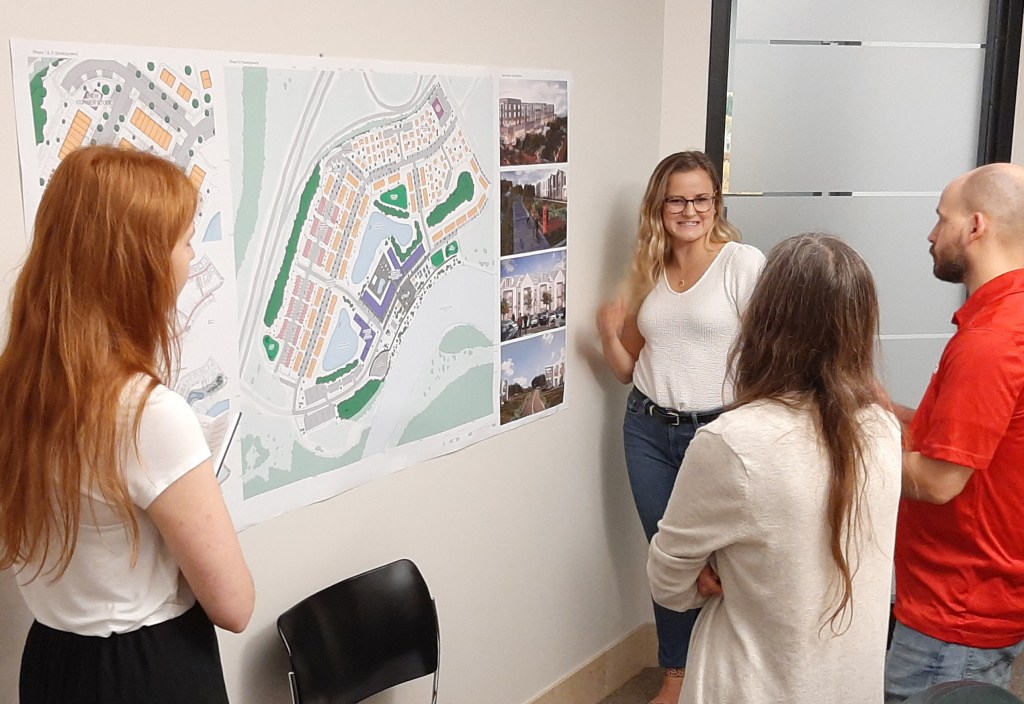
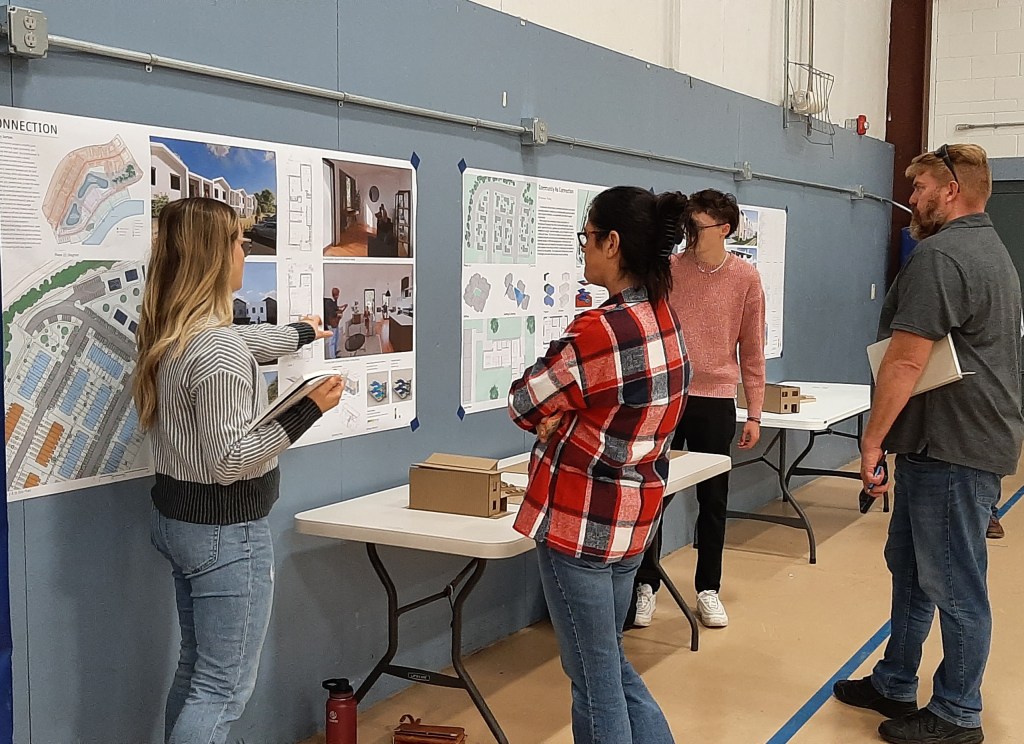

Process. Students worked as a large group to begin the project with bioclimatic analysis and neighborhood research. The studio formed smaller teams to tackle the design of the masterplan, developing a design thesis for the whole site to address issues such as how to integrate amenities and commercial activity, multimodal circulation including pedestrian features, and sustainable site design that incorporated natural features and managed
stormwater on site. The 14 students in the studio used the remainder of the semester after masterplan and site design to complete
individual designs for homes. The design process went through the design development phases, with the students learning about the integration of structure and systems in townhome design. During the design process, the studio presented their work at a community open house hosted by Habitat for Humanity at the Ogden community center. About 50 residents came to the event to see the students’ projects and discuss affordable housing and housing types, including the area’s State Senator Usha Reddi.
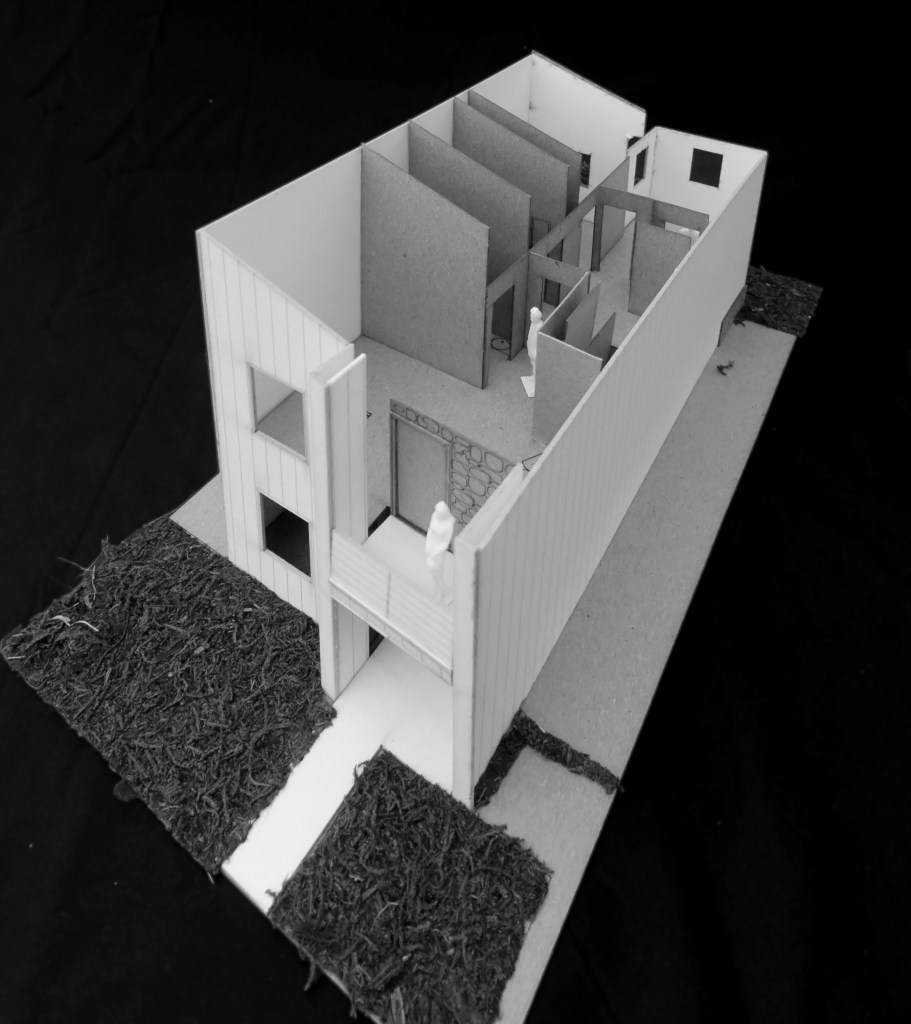

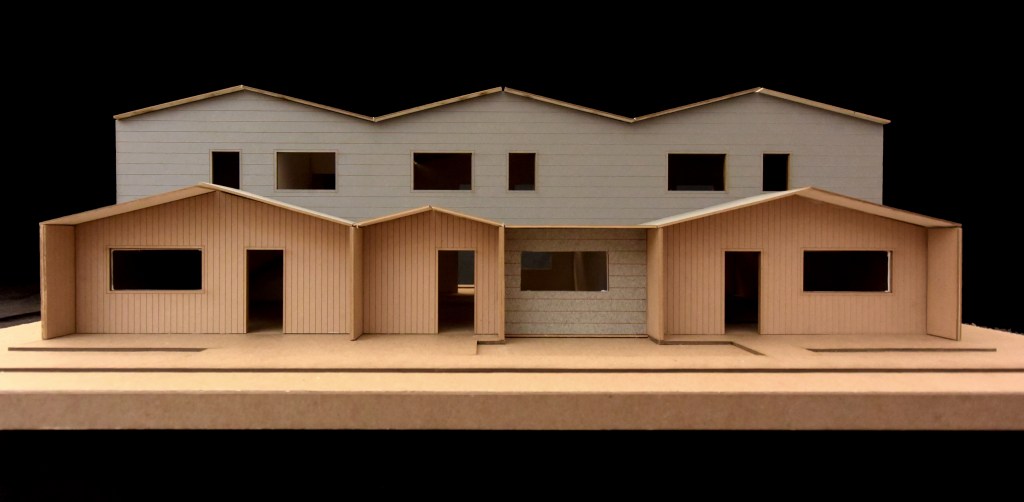

The studio was generously sponsored by the Kansas City firm NSPJ. Students traveled to NSPJ for early design reviews, and architects and leadership from NSPJ attended reviews at K-State, including the final review. Architects from NSPJ frequently shared their expertise in conceptualizing, planning, and detailing the multifamily work their office is known for.
 The Net Positive Studio