
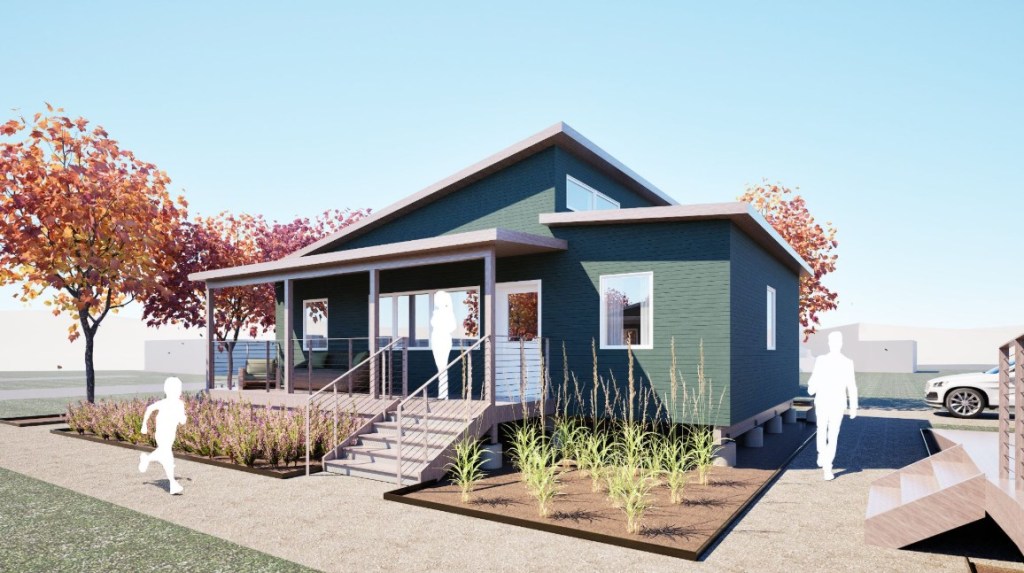
The Zero Carbon Microhome is the studio’s fourth project collaborating with the Workforce Solar Housing Partnership, with Habitat for Humanity of the Northern Flint Hills as the project’s GC and Developer. The project was funded in part by the K-State 105 Engagement Initiative, intended to be a demonstration project of net zero carbon residential construction that showcased Kansas-grown hemp. Hemp herd featured in the project was grown, harvested, and processed sustainably by Prairie Band Agriculture LLC in Holt, KS. It is the first new home in Kansas to feature hempcrete and also the first Habitat for Humanity home feature this material. Through the use of low-carbon and carbon negative materials and construction practices, the home has less than 10% of the embodied energy of a typical new home. The home will be net zero site energy and will achieve net zero carbon after 19 years, offsetting its original embodied carbon through renewable energy surpluses — after which it will become full carbon negative.
A detailed study of the project’s construction methods, energy metrics, and carbon assessment was written by Michael Gibson, faculty lead for the studio, and published in Frontier’s Sustainability in 2025. The article can be downloaded at the this link.
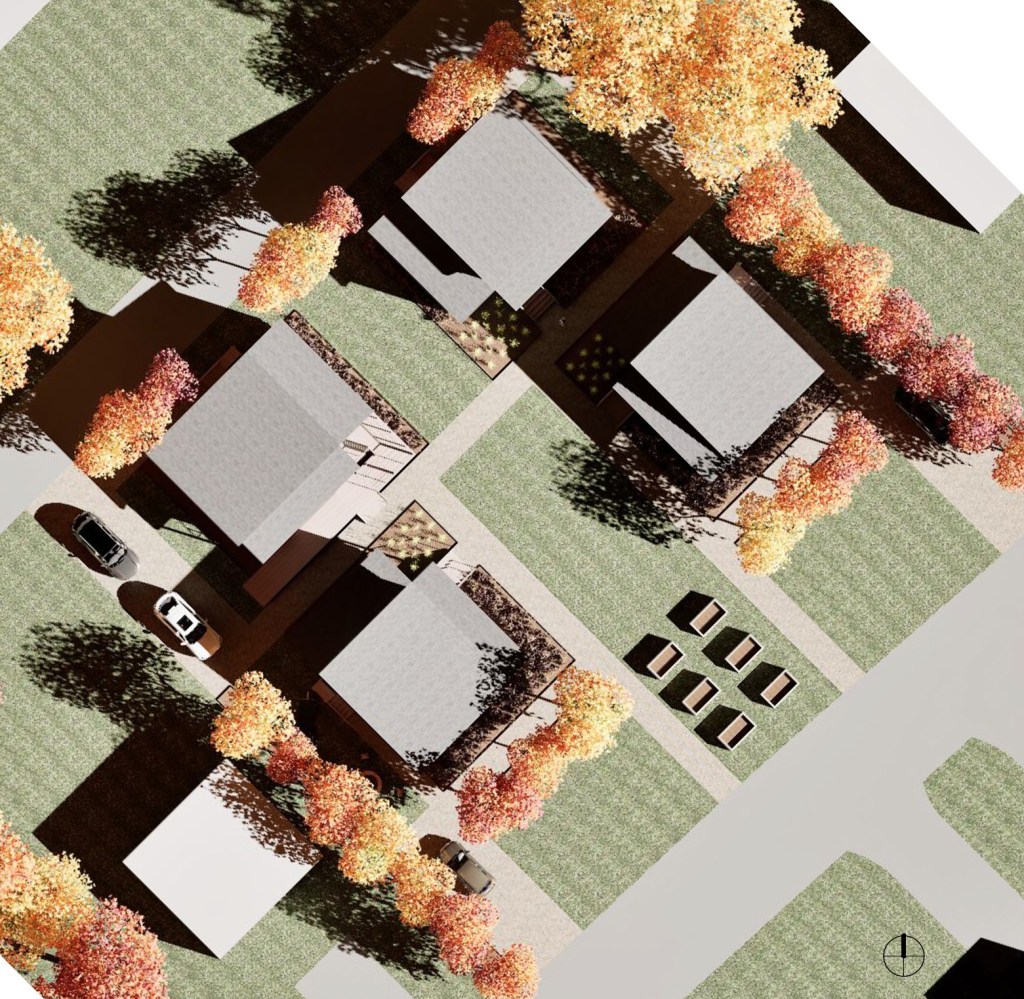
The Fall 2024 studio began the project considering a site on 9th Street in Ogden, Kansas, which had recently been donated to Habitat for Humanity. Early in the process, the project was designated to be a “cluster development” of four homes and the second development project by the local community land trust (Good Steward CLT) whereby the homes would be purchased by homeowners while the land is owned and maintained by the CLT, an approach that lowers the purchase price for homeowners while also preserving affordability for future buyers.
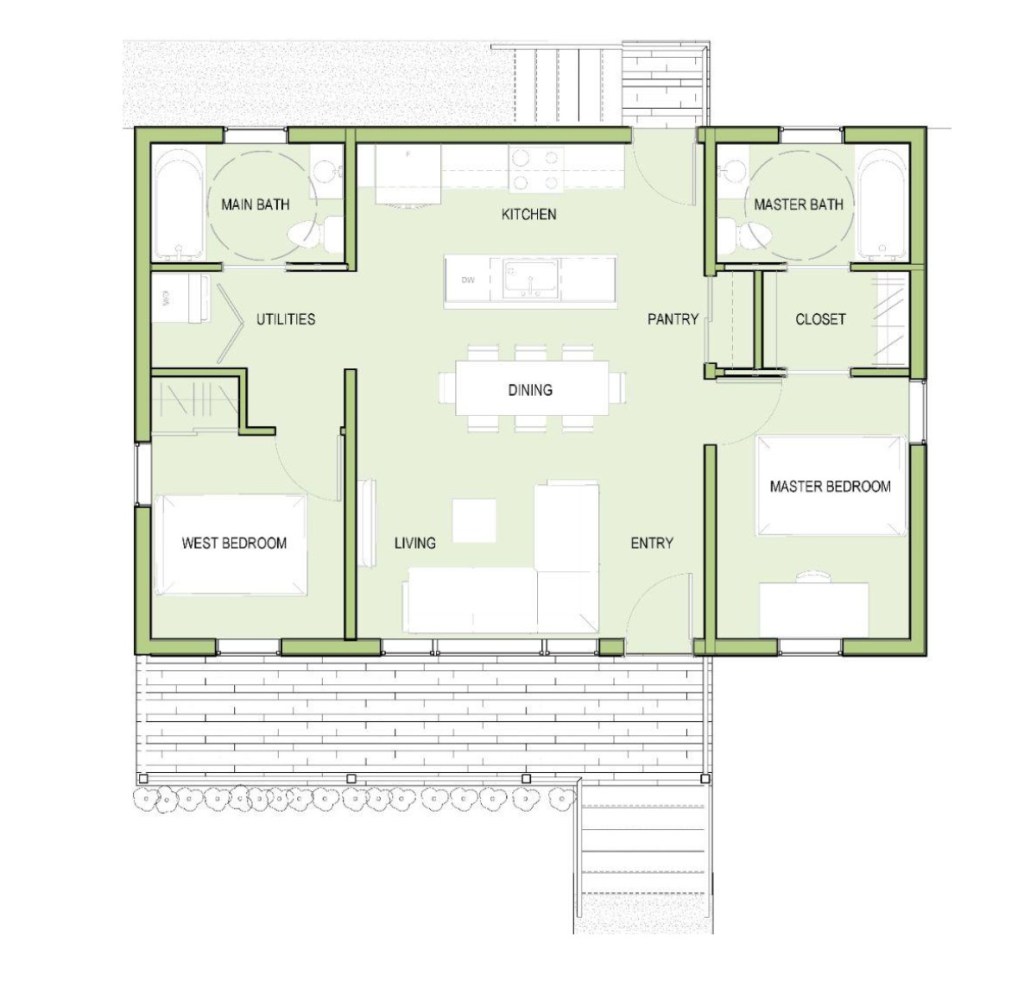
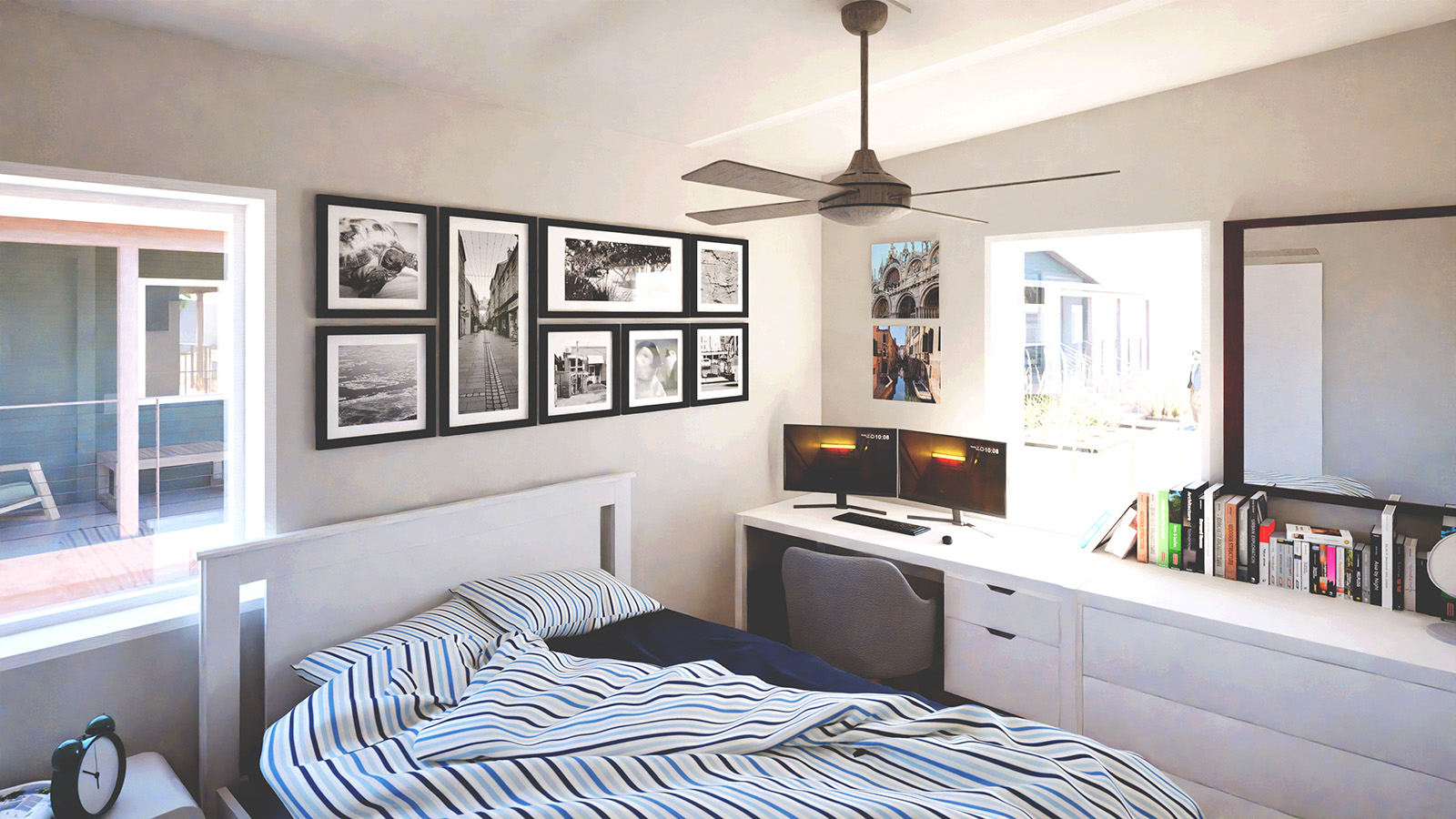
The studio worked with a program of two bedrooms and two full baths for the home, which would also include a generous full-sized kitchen, dining space, and living area. The home meets Habitat for Humanity’s standards for future adaptability to accessibility, and meets strigent 2021 IRC building code for energy and structural resilience. While designing the home, students in the studio optimized an insulation strategy to include hempcrete in the floor while utilizing lighter hemp fiber insulation batts for the walls and roof/ceiling assembly. Even without foam insulation, the home met the studio’s net zero goals. In order to reduce concrete in the foundations, the home rests on reinforced concrete piers.
The home was built using a combination of modular and panelized prefab, utilizing four small modules for the wings with panels in between, an approach that allows for the tall ceiling in the living area and clerestory windows that bring in natural light.
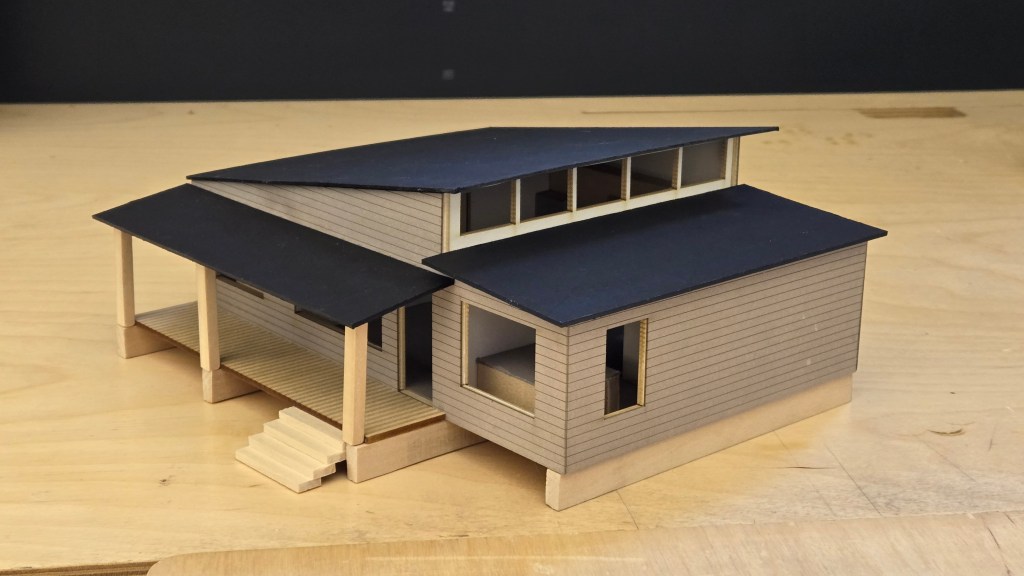
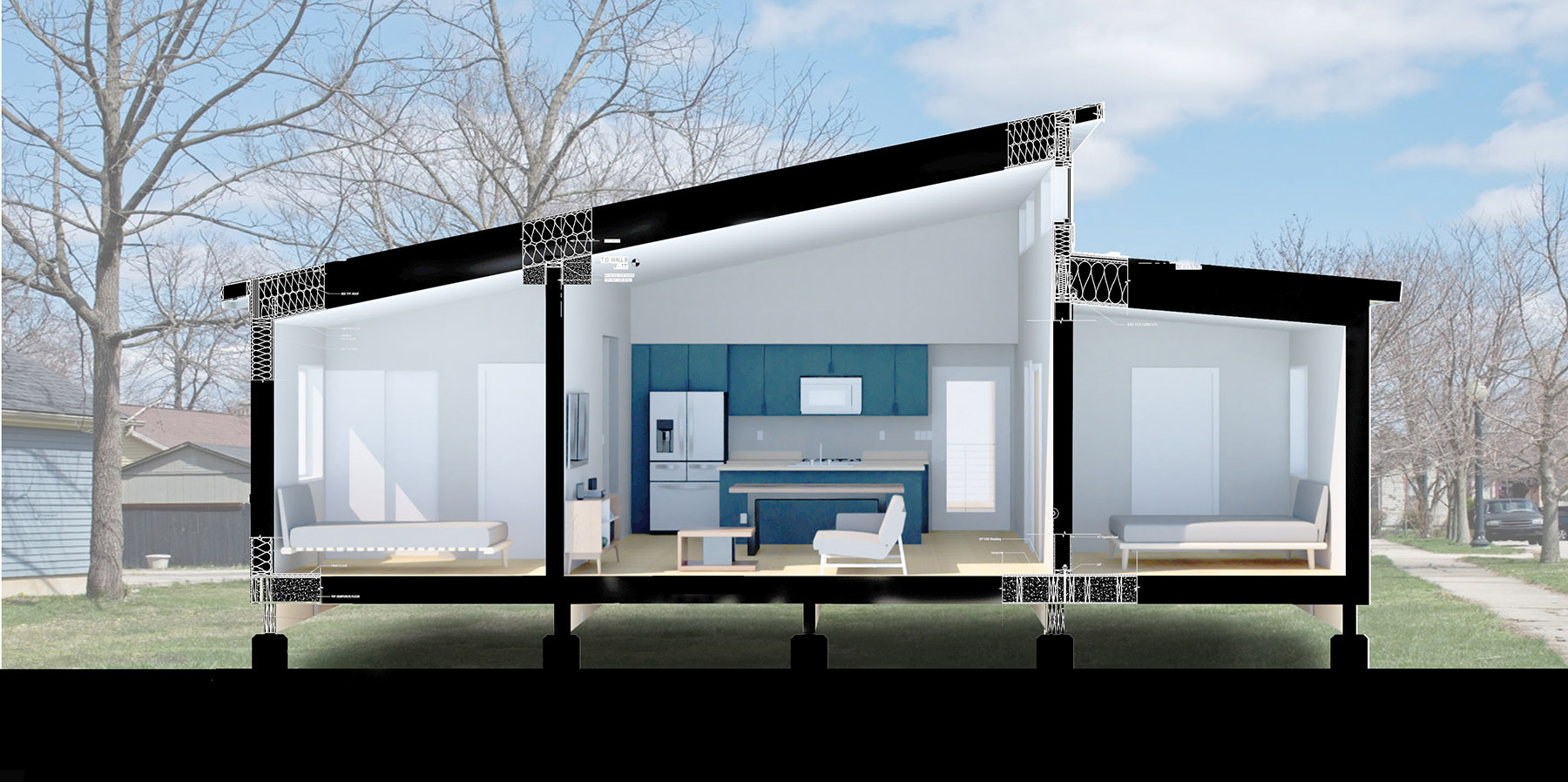
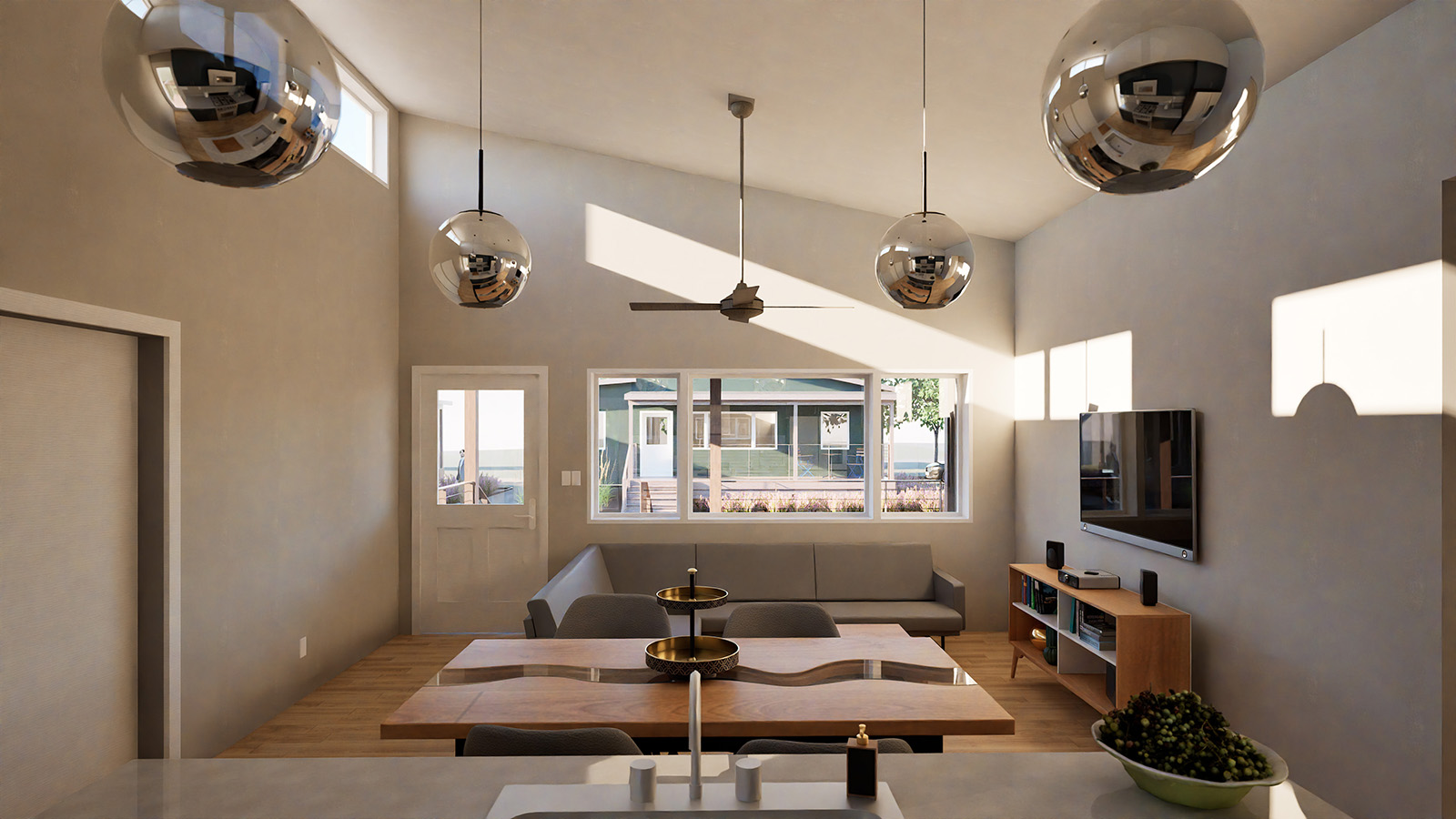
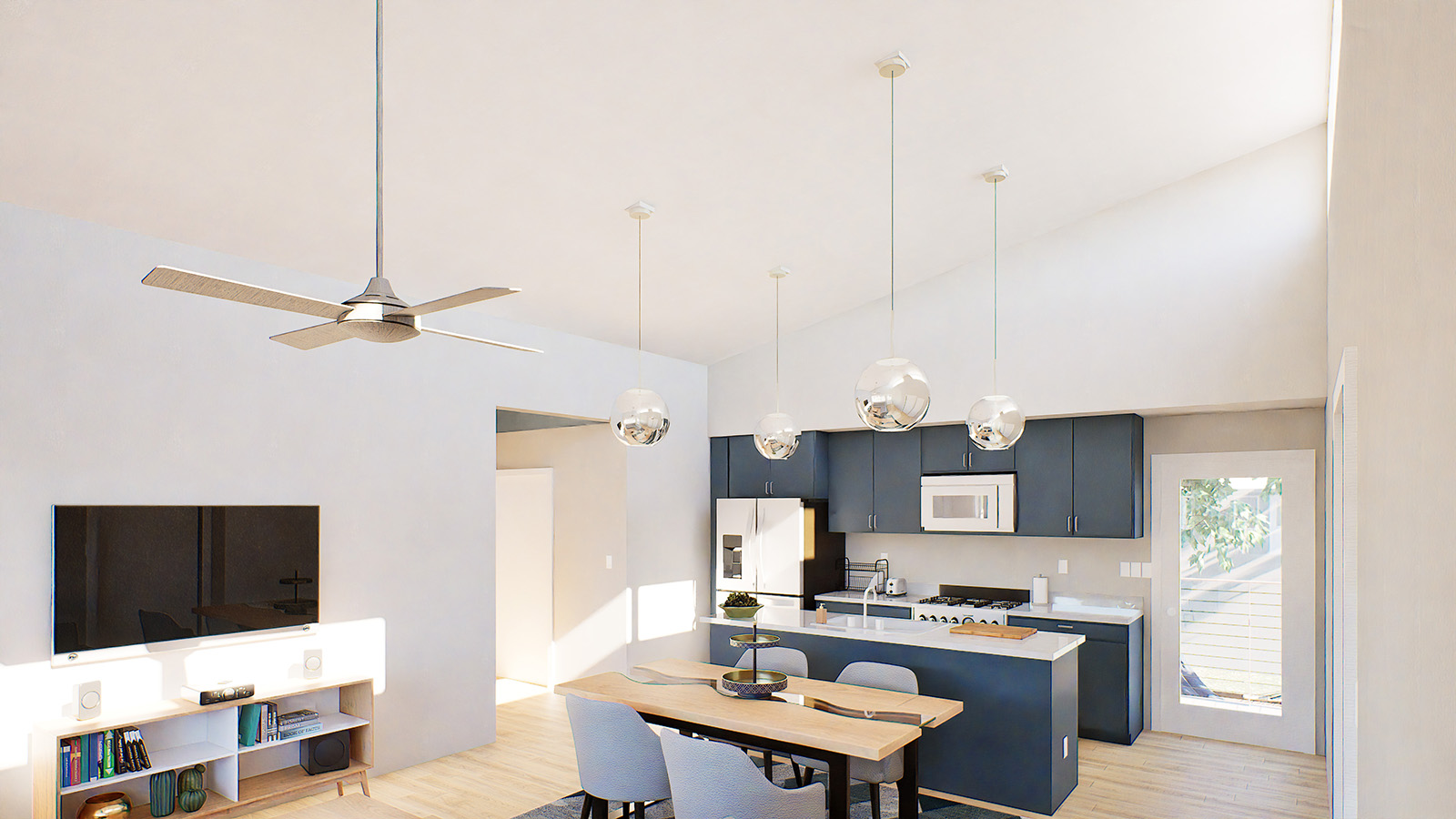
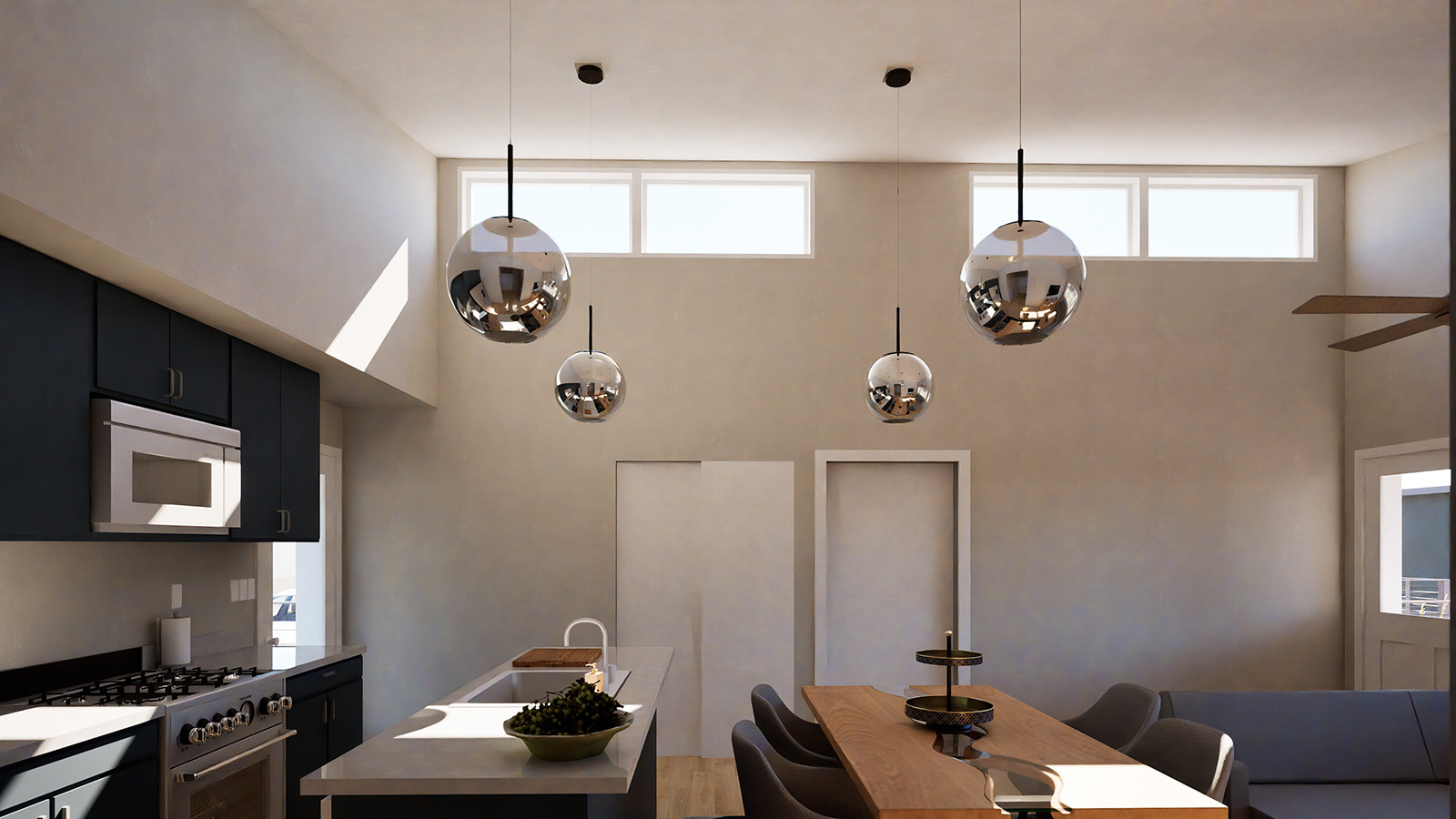
The home was prefabricated at APDesign’s off-campus shop facility, where hempcrete was installed into the prefab assemblies in the parking lot. The rest of the home’s shell was erected temporarily in the parking lot before it was relocated to Ogden.
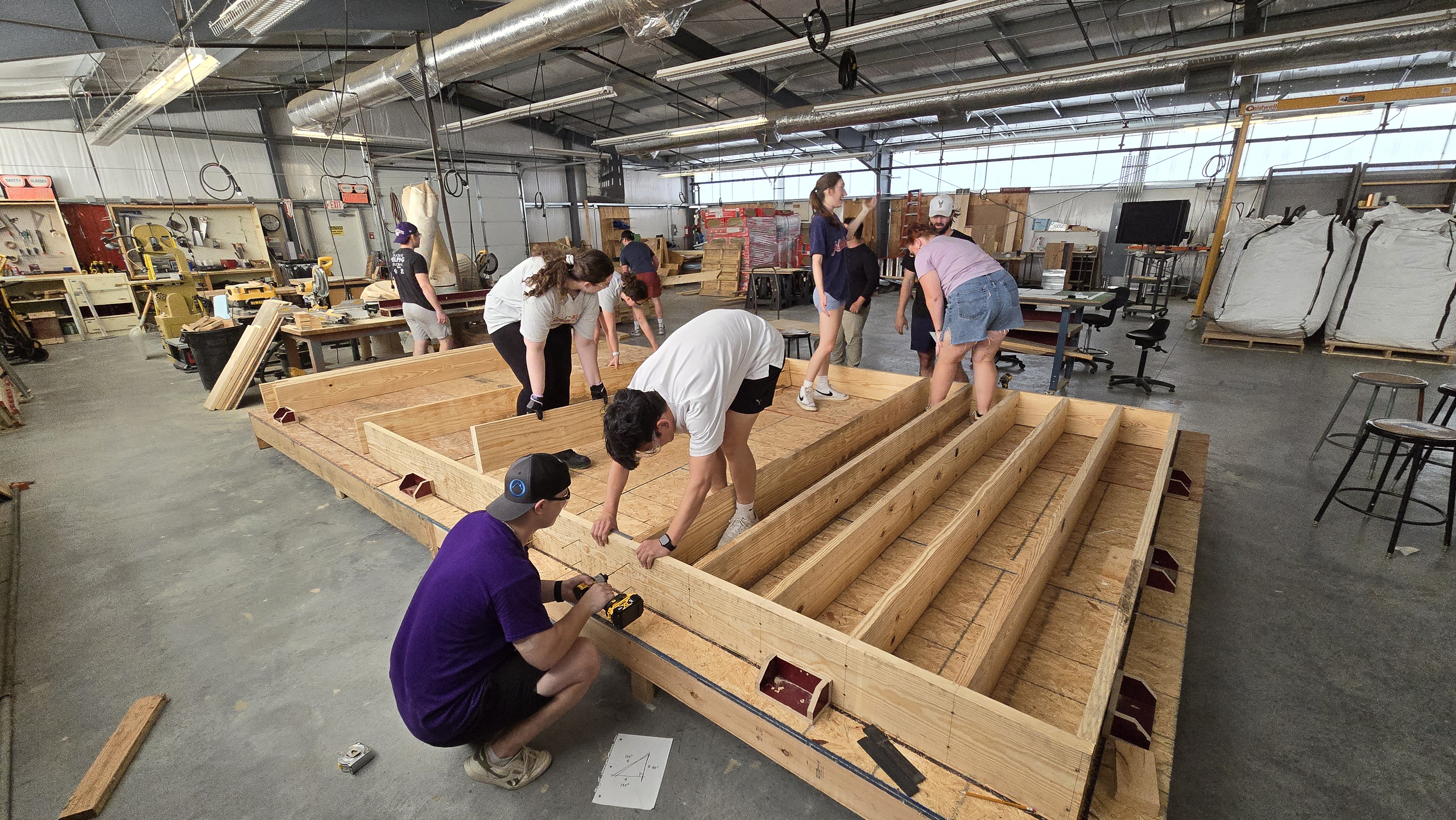
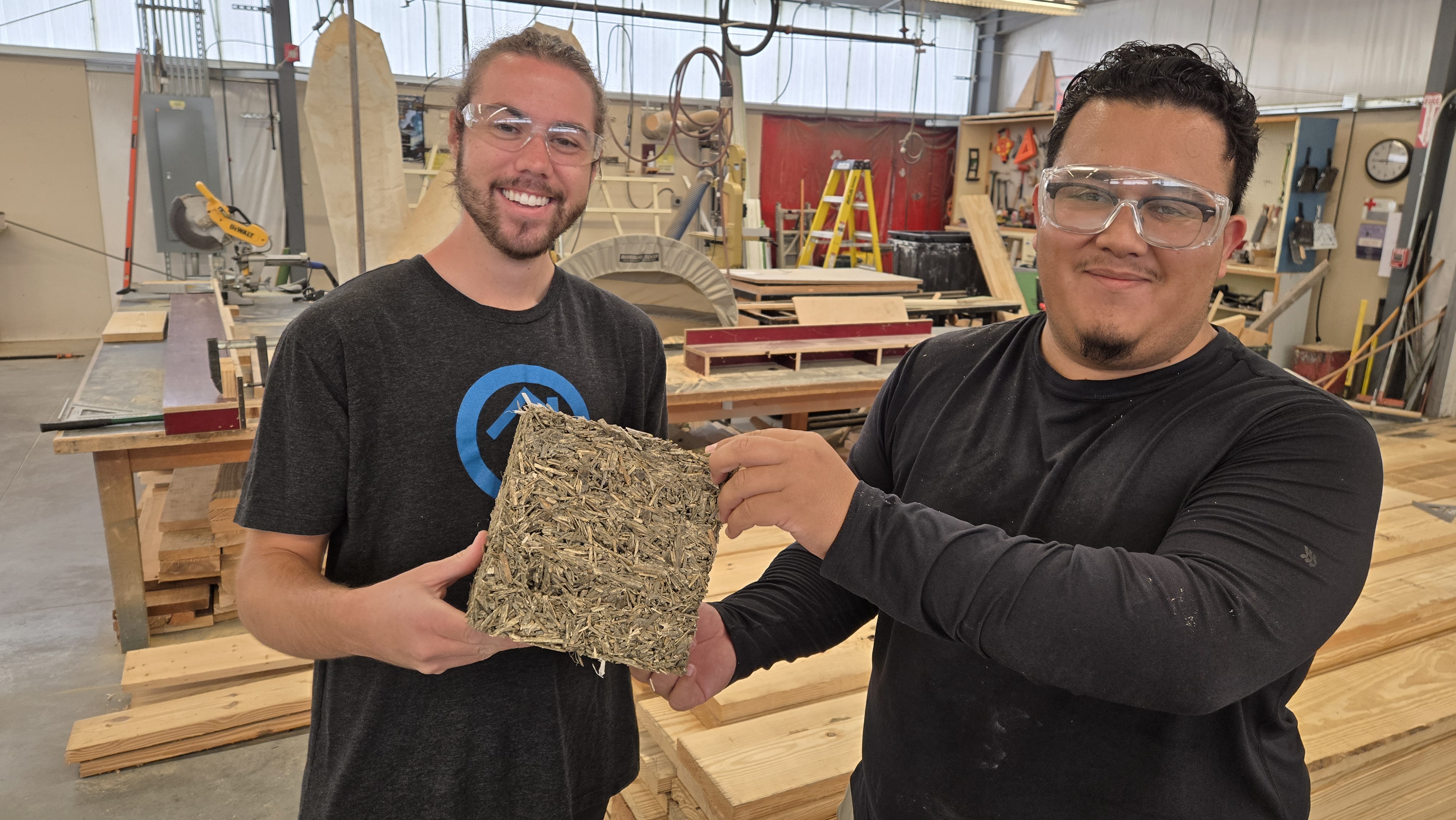
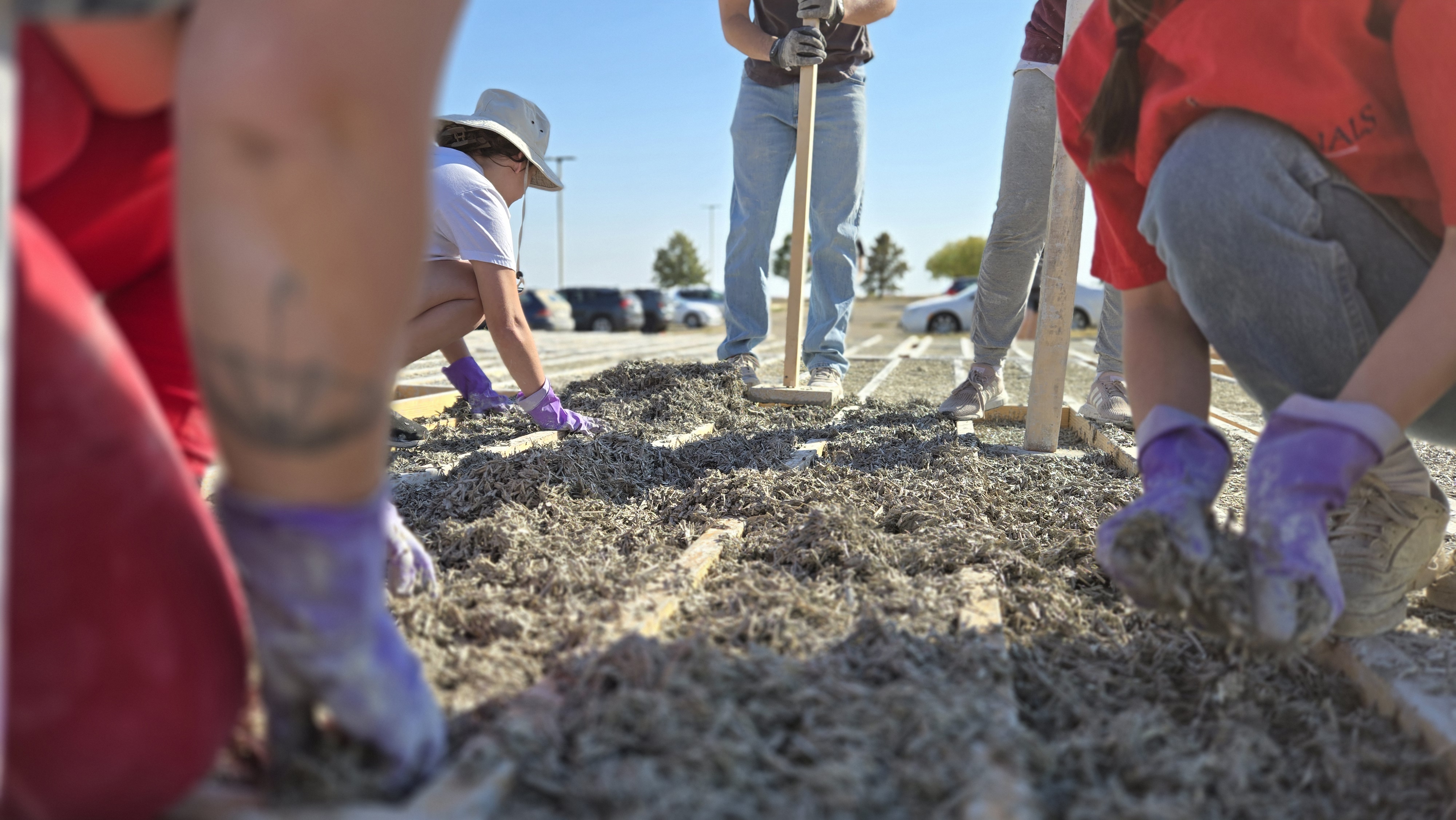
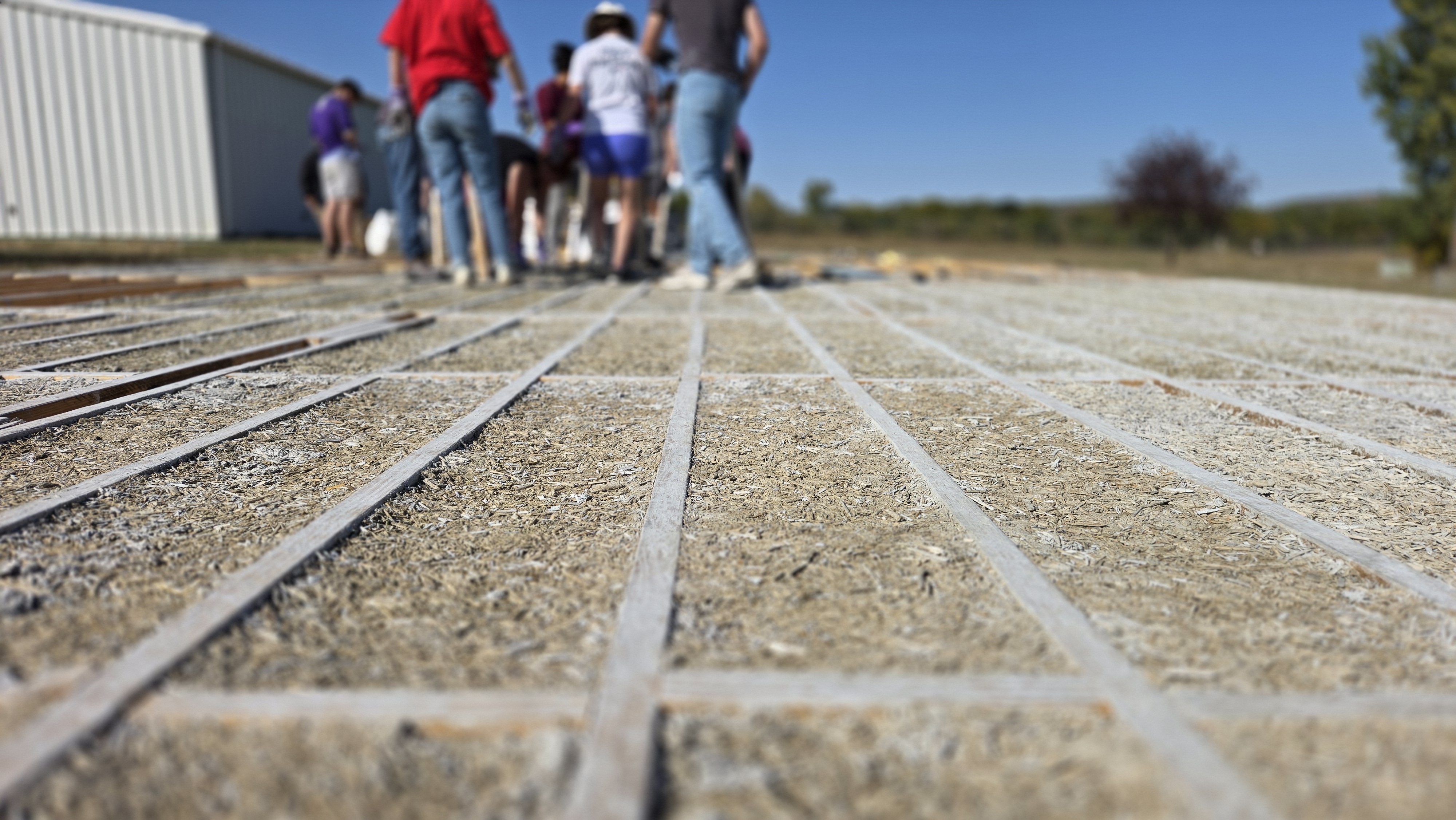
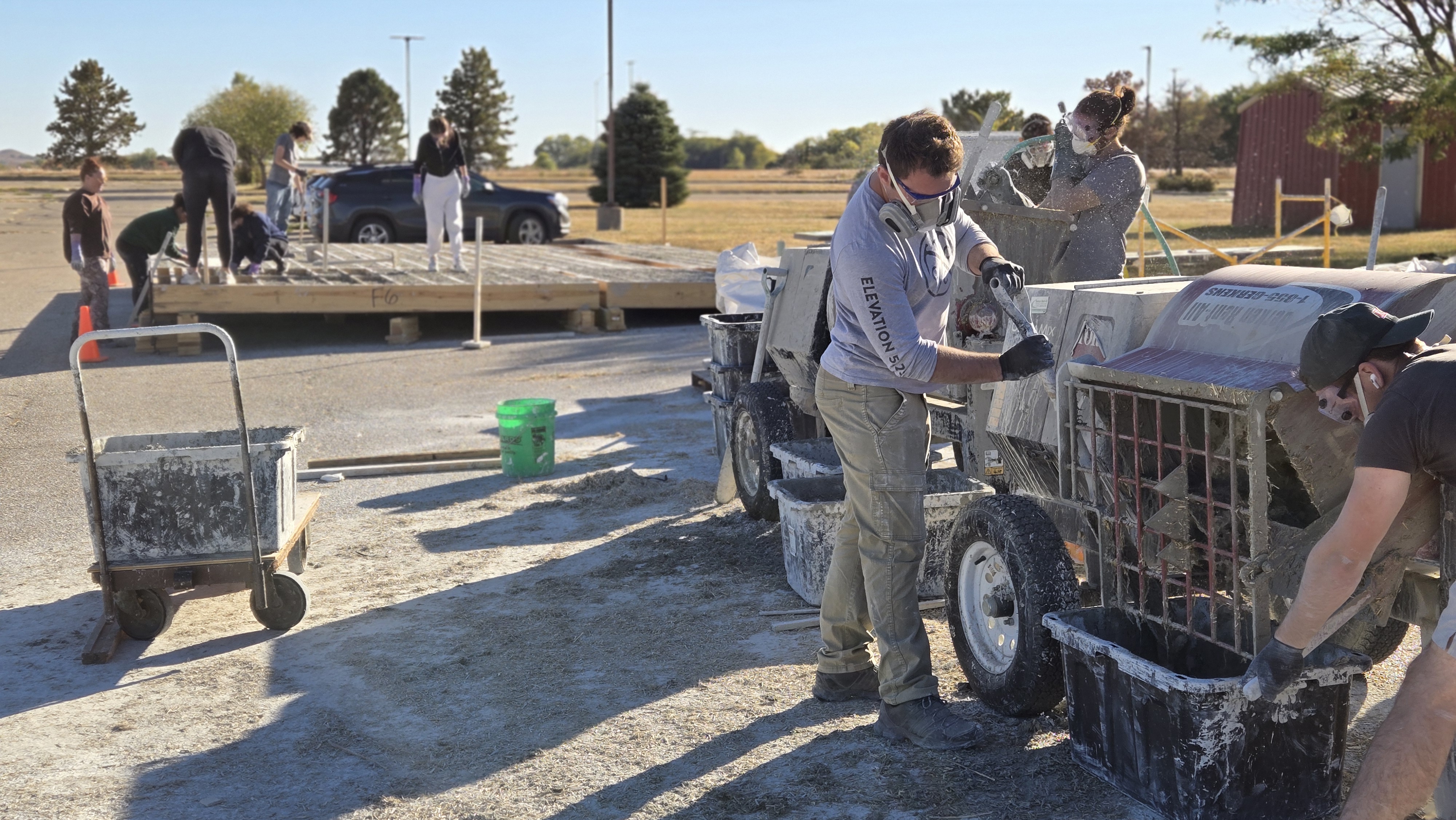
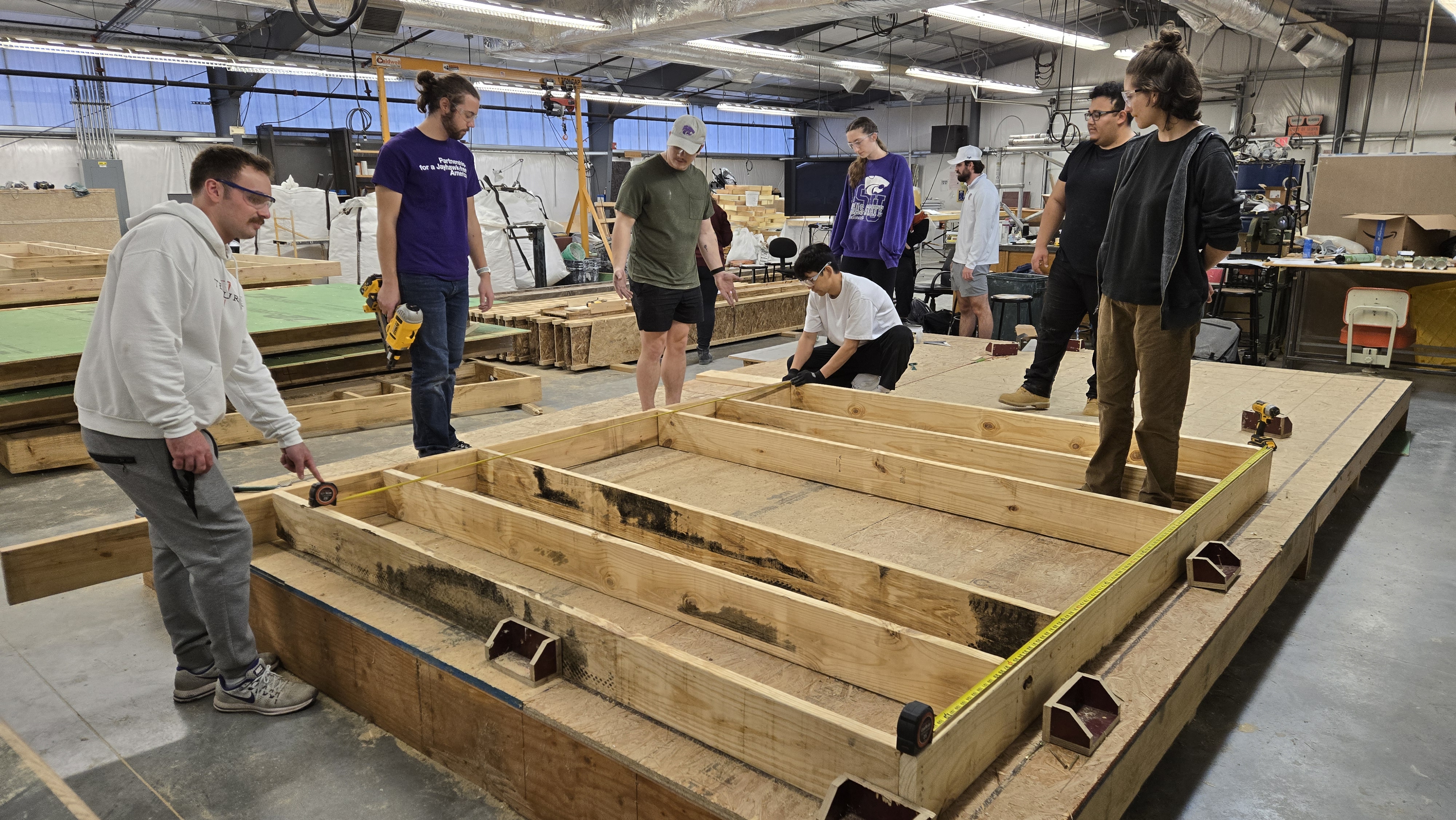
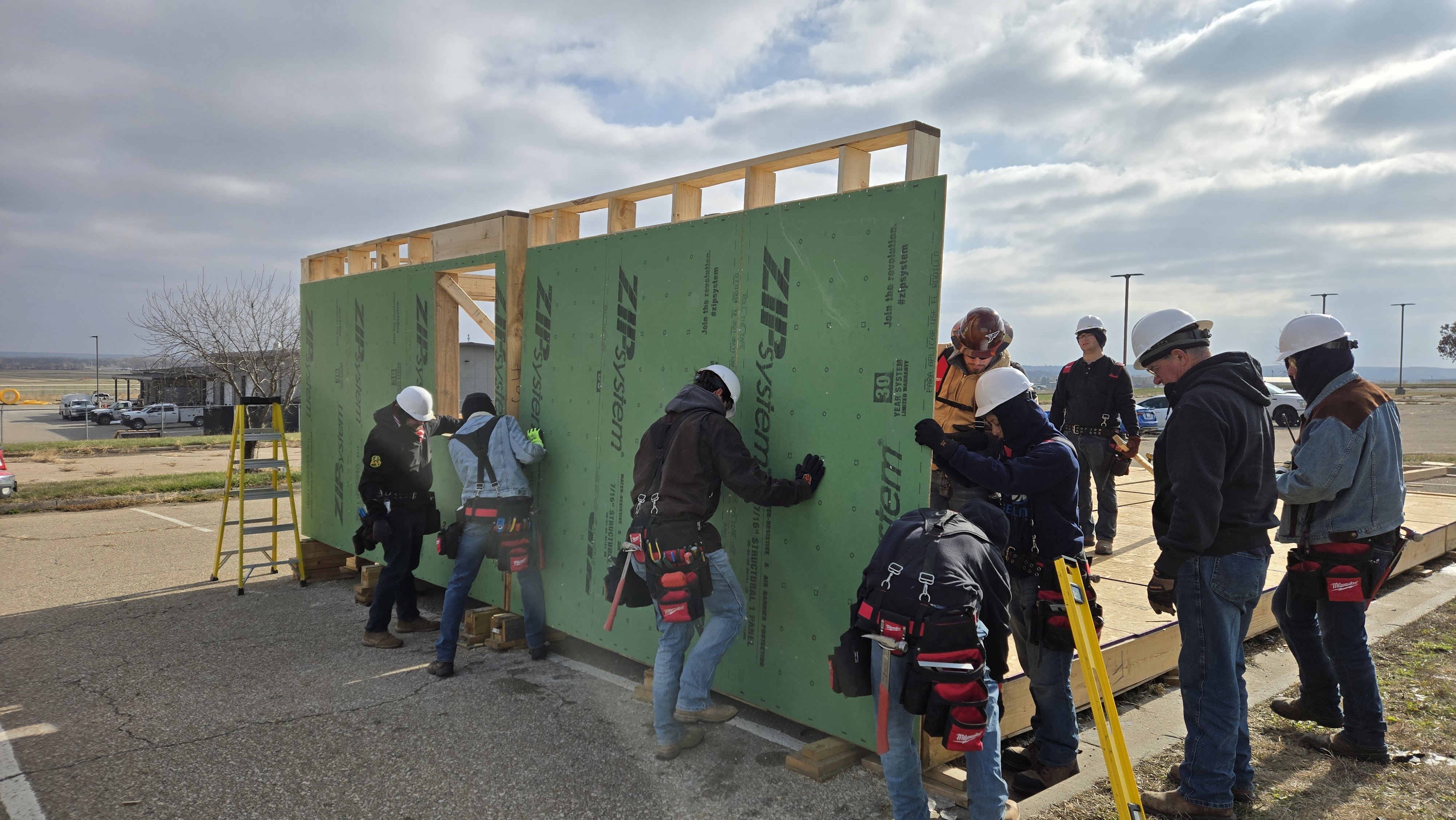
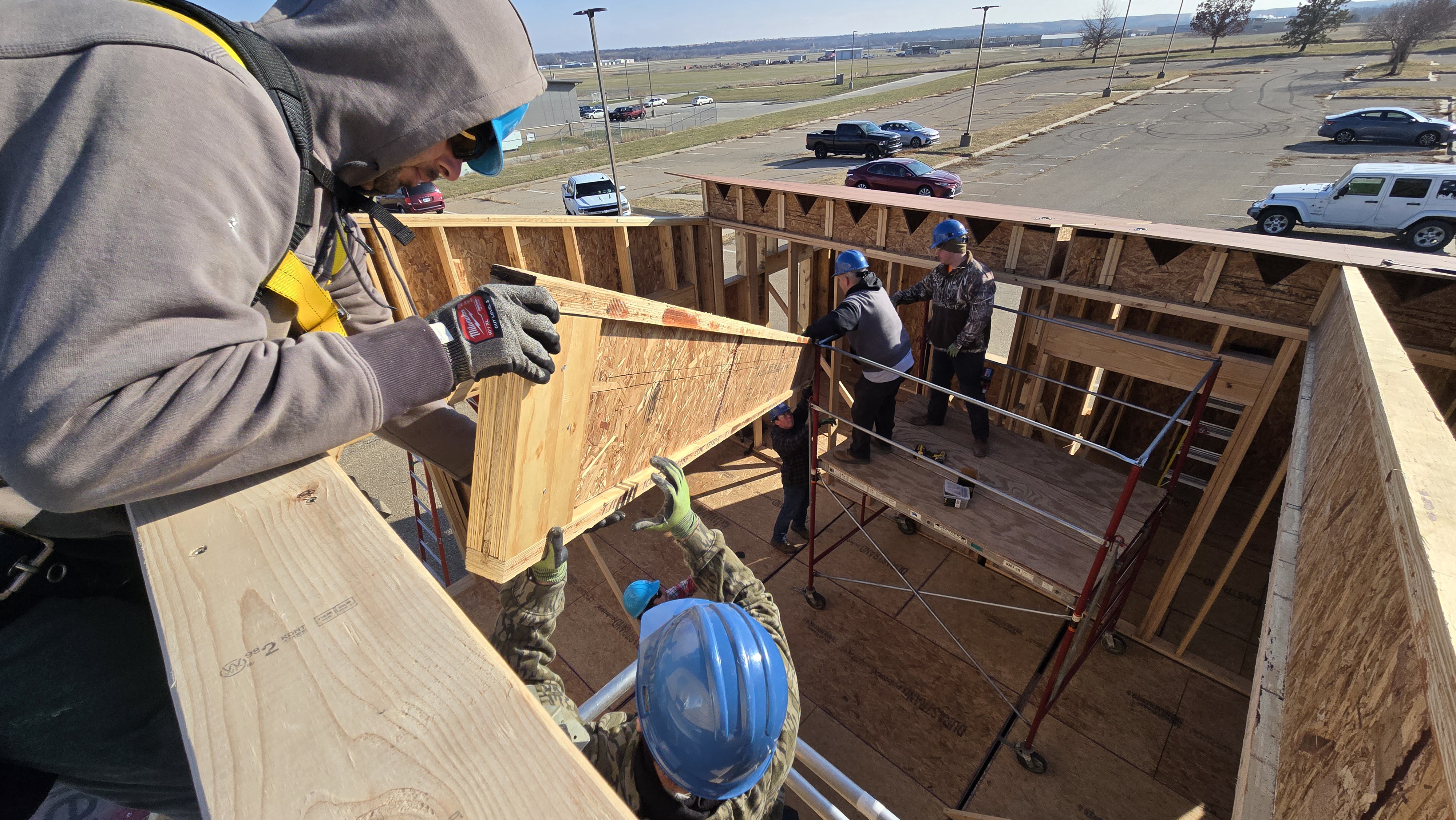
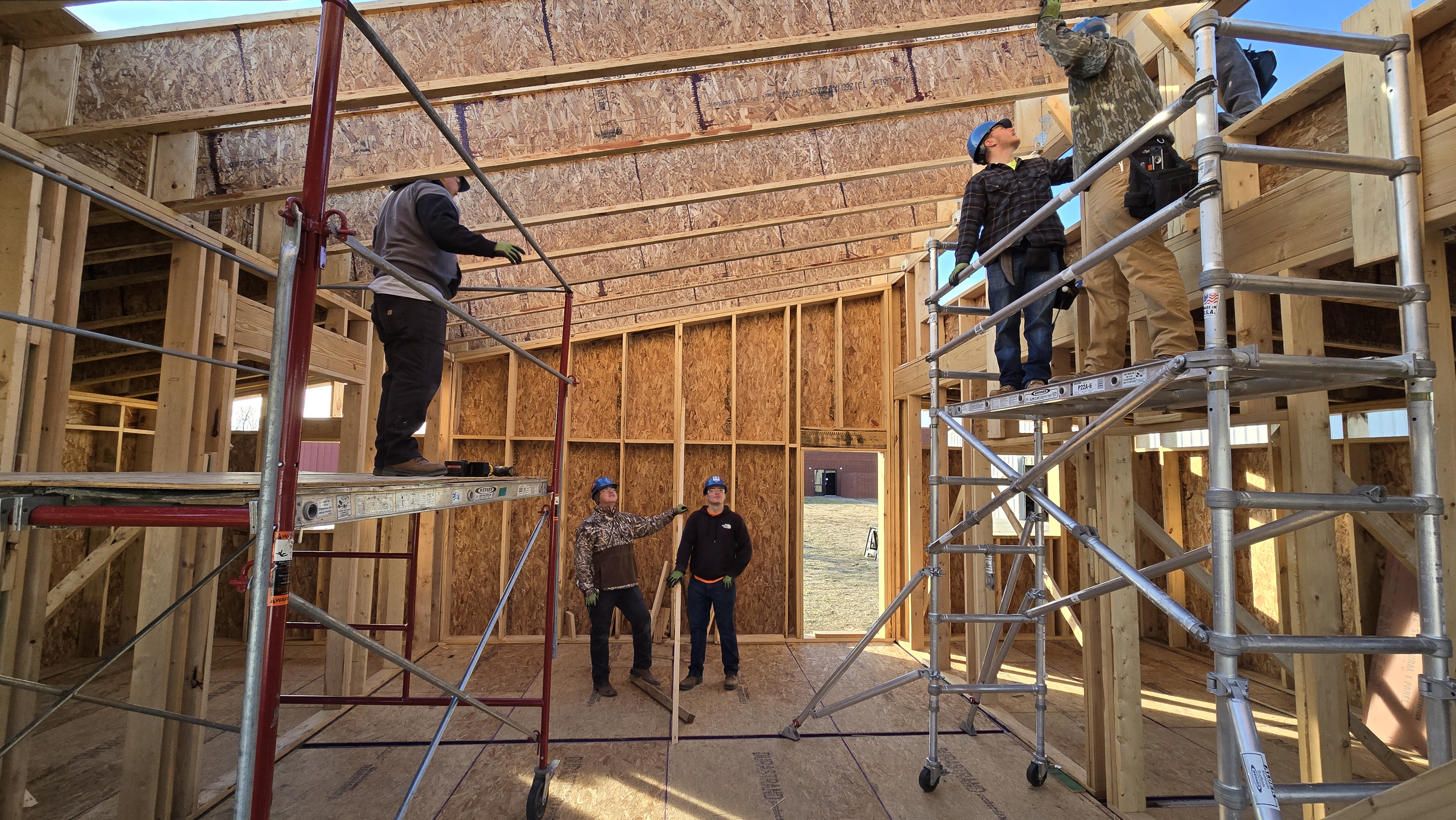
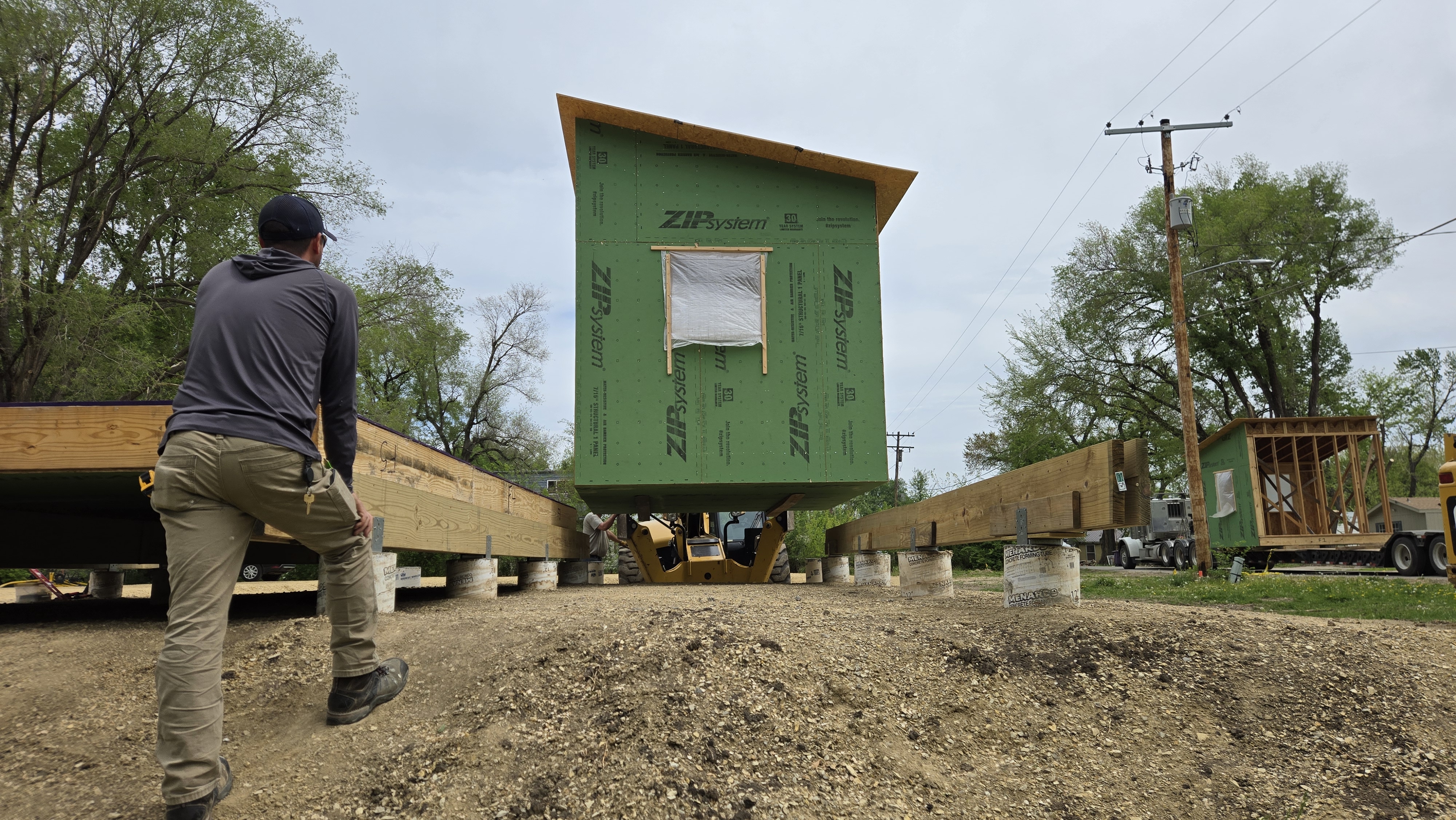
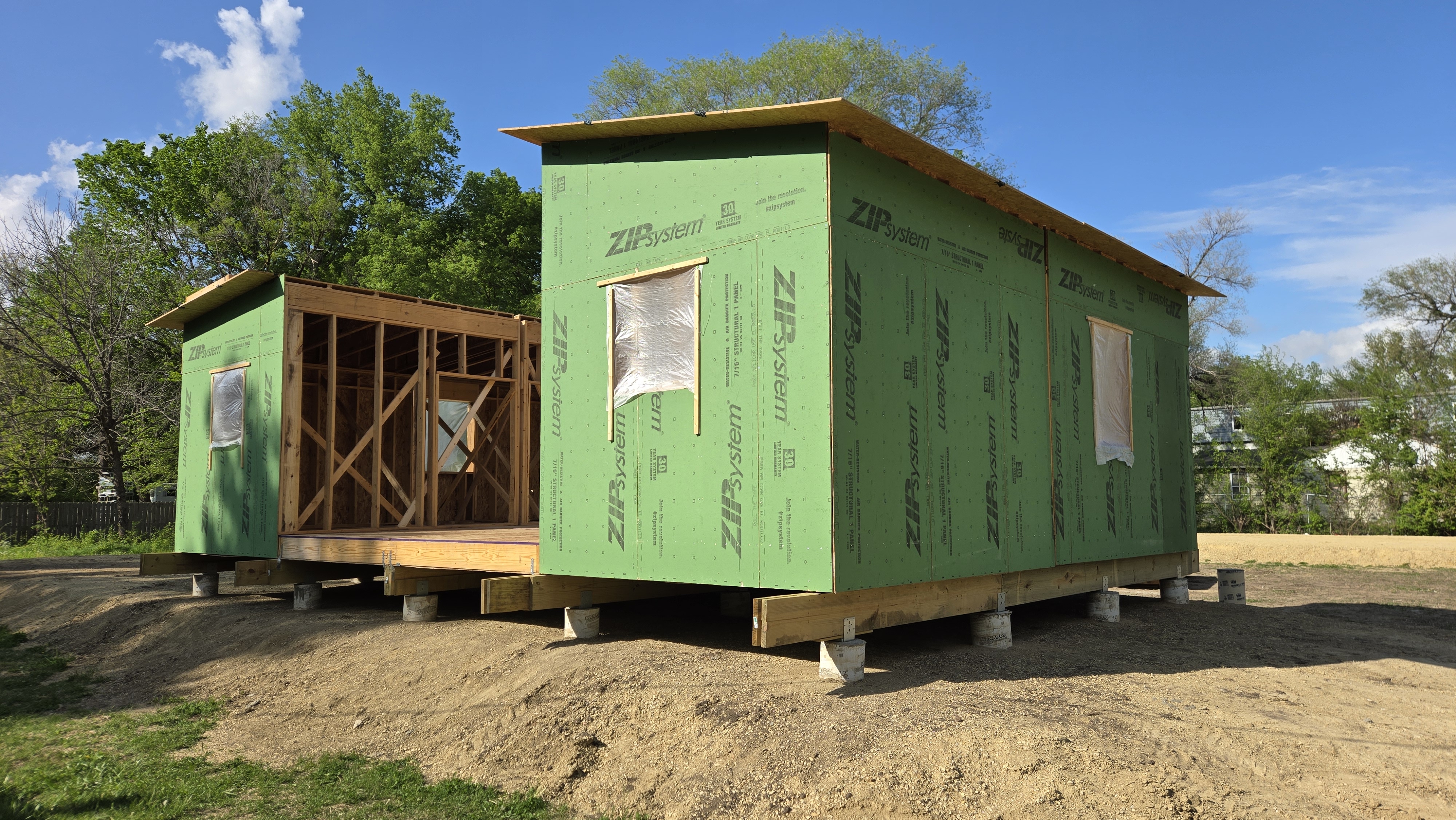
Students from the studio were joined by K-State Engineering students from the DBIA and AGC Student Organizations during the build, along with students from Flint Hills Job Corp who contributed to hempcrete work. Construction Tech students from Manhattan Area Technical College and soldiers from the Home Builder’s Institute at Ft. Riley assembled, disassembled, and rebuilt the house on site along with Flint Hills Habitat construction staff. The studio thanks this extended group for their help on the project! The project will be completed in 2026.
Fall 2024 Net Positive Studio Students: Kaden Beck, Natalie Bell, Rylee Boyd, Mario Castro-Cortes, Delaney Ferguson, Gabriela Hernandez Morales, Rebecca Kwasnica, Seth Larson, Connor Martin, Seth Mcquery, Naia Tunks, Joseph Winter, Seongyun Jeong.

